AI Agent Books in 2025
An interactive comparison of books covering AI agents, multi-agent systems, and LLM fundamentals. Find the right resource for your learning goals based on verified information from GitHub repositories and official sources.
Disclosure: I wrote one of these books (Designing Multi-Agent Systems), and this is not an exhaustive survey. Scores come from each book’s public table of contents, README and code repository.
| Book | Agent Concepts | Multi-Agent Patterns | Hands-on Implementation | UX Principles |
|---|---|---|---|---|
Victor Dibia 276 code files | 15 chapters covering agent execution loop, tools, memory, middleware, computer use agents, evaluation trajectories, optimization strategies, and distributed protocols (MCP, A2A). | Ch2 provides full taxonomy: deterministic (sequential, conditional, parallel, supervisor) and autonomous (plan-based, handoff, conversation-driven). Ch6-7 implement each pattern from scratch. | Builds complete PicoAgents library from scratch across Part II (6 chapters). Includes evaluation framework, optimization techniques, and two full case studies (business Q&A, software engineering agent). | Ch3 establishes 4 UX principles (capability discovery, cost-aware delegation, observability, interruptibility). Ch8 provides a guide on building modern agent UIs with FastAPI + SSE backend, Vanilla JS and React frontend with streaming. |
Michael Albada 62 code files | Covers scenario specs, multi-framework implementations, evaluation harness, observability. | Ch7 covers multiagent coordination patterns (democratic, hierarchical, actor-critic), communication protocols, and conflict resolution. Implements across multiple frameworks. | Multiple scenario-based applications: ecommerce, financial services, healthcare, IT helpdesk, legal, SOC, supply chain. | Ch10 covers human-agent collaboration in depth: roles/autonomy, trust lifecycle, escalation design, oversight, shared memory, governance, and compliance. Production-focused but addresses user-facing concerns. |
Valliappa Lakshmanan & Hannes Hapke 114 code files | Chapter 7 covers Tool Calling, Code Execution, and Multi-agent patterns. Broader focus on 32 GenAI patterns including RAG, reasoning, and reliability. | Pattern #23 covers multi-agent collaboration. Additional supporting patterns include LLM-as-Judge (#17), Reflection (#18), and Long-Term Memory (#28) that enable multi-agent systems. | Dedicated example folder for each of 32 patterns. Pattern-focused examples rather than complete applications. | Focus is on backend patterns: content control, retrieval, reasoning, and reliability. Valuable foundation for agent backends. |
Sebastian Raschka 112 code files | Reasoning is covered in depth — inference-time scaling, self-consistency, self-refinement — and Ch3 builds the answer grading that verifiable rewards depend on. Tools, memory and orchestration are out of scope. | Single model throughout. No coordination, handoff or orchestration content. | A working GRPO training loop in reasoning_from_scratch/ch06.py (reward_rlvr, sequence_logprob, compute_grpo_loss, train_rlvr_grpo), with batched and FSDP variants, then Ch7 adds KL, clip ratio and format rewards as separate runnable scripts. CI runs the code on Linux, macOS and Windows. | One appendix builds a chat interface. Otherwise the subject is model internals. |
Sebastian Raschka 177 code files | Focuses on understanding LLMs at the architecture level - essential foundation for understanding what agents call under the hood. | Focuses on single model training and finetuning. Valuable for teams building custom models for agent systems. | Extensive notebooks building GPT from scratch. Every concept implemented in code. | Focus is on model internals: attention, pretraining, finetuning. Deep understanding helps debug agent behavior. |
Book Details
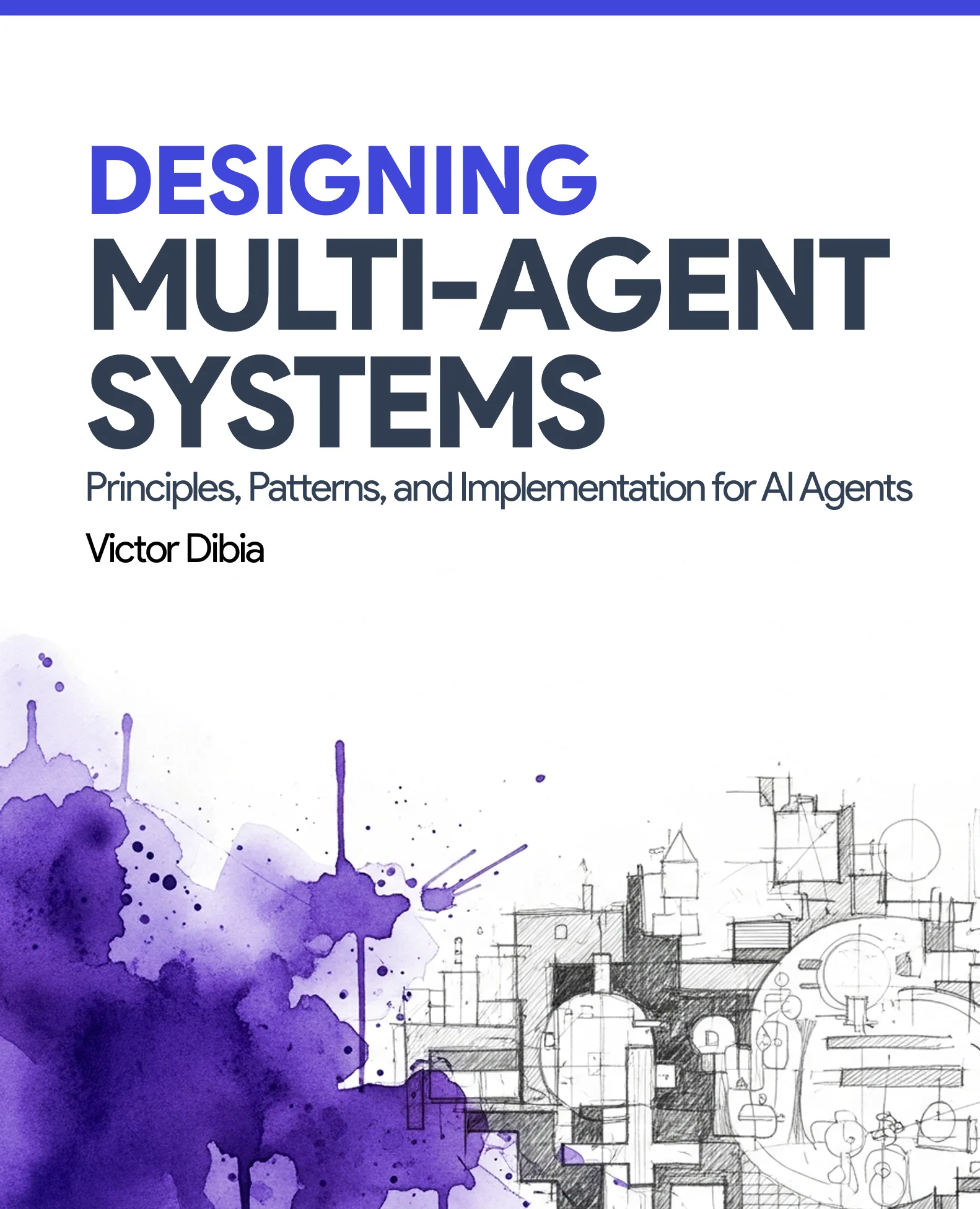
Designing Multi-Agent Systems
Victor Dibia • 2025
15 chapters across 4 parts teaching multi-agent systems from first principles. Part I covers theory (patterns, UX principles). Part II guides the reader through building a full featured but hackable multi-agent framework called - PicoAgents - from scratch. Spefically, you build an agent class (add model clients, tool calling, middleware, observability with opentelemetry, human input and approvals, agents as tool), extend it to build a computer use agent, builld multi-agent workflows, orchestration, and learn to integrate these into a web application. Part III covers evaluation, optimization, protocols (MCP/A2A), and ethics. Part IV provides full case studies (you build a multiagent workflow for structured data analysis and a software engineering agent). The GitHub repo also contains examples of the same concepts implemented using the Microsoft Agent Framework (successor to AutoGen and Semantic Kernel), Goole ADK, and LangGraph.
Coverage by Dimension
Agent Concepts | 15 chapters covering agent execution loop, tools, memory, middleware, computer use agents, evaluation trajectories, optimization strategies, and distributed protocols (MCP, A2A). |
Multi-Agent Patterns | Ch2 provides full taxonomy: deterministic (sequential, conditional, parallel, supervisor) and autonomous (plan-based, handoff, conversation-driven). Ch6-7 implement each pattern from scratch. |
Hands-on Implementation | Builds complete PicoAgents library from scratch across Part II (6 chapters). Includes evaluation framework, optimization techniques, and two full case studies (business Q&A, software engineering agent). |
UX Principles | Ch3 establishes 4 UX principles (capability discovery, cost-aware delegation, observability, interruptibility). Ch8 provides a guide on building modern agent UIs with FastAPI + SSE backend, Vanilla JS and React frontend with streaming. |
Topics Covered
What This Book Provides
- •Part I: Theory foundation—agent definition, 6 orchestration patterns (sequential, conditional, parallel, supervisor, handoff, conversation-driven), 4 UX principles
- •Part II: Build PicoAgents library from scratch—Ch4 covers BaseAgent (async loop, streaming), BaseChatCompletionClient (multi-provider LLMs), structured output (Pydantic), BaseTool/FunctionTool (auto-schema from type hints), CancellationToken, BaseMemory (RAG), MemoryTool (cross-session learning), BaseMiddleware (security/PII/rate-limiting/OpenTelemetry), context engineering (compaction, isolation, filtering), human-in-the-loop (tool approval, stateless clarification), agents-as-tools; Ch5 covers computer use agents; Ch6-7 cover workflows and autonomous orchestration; Ch8 covers web UX with FastAPI/SSE/React
- •Part III: Production readiness—trajectory evaluation, 10 failure modes, MCP/A2A protocols, ethics and security
- •Part IV: Complete case studies—business Q&A from unstructured data, software engineering agent
- •276 code files, framework-agnostic patterns, digital version with quarterly updates
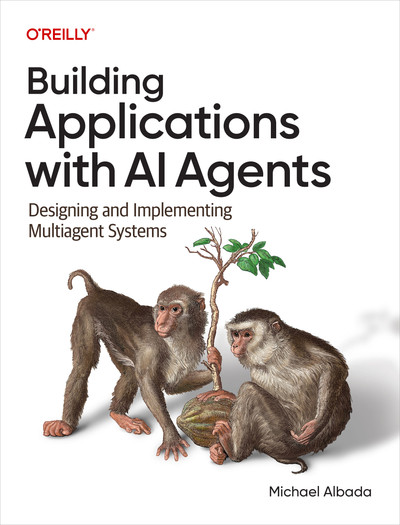
Building Applications with AI Agents
Michael Albada • 2025
A solid introductory resource for folks new to AI agents. Notably covers human-agent collaboration, trust, and governance (Ch10), plus learning from experience with fine-tuning approaches (Ch6). Includes code samples across 3 frameworks (LangGraph, LangChain, AutoGen)—though these may become outdated given rapid framework evolution.
Coverage by Dimension
Agent Concepts | Covers scenario specs, multi-framework implementations, evaluation harness, observability. |
Multi-Agent Patterns | Ch7 covers multiagent coordination patterns (democratic, hierarchical, actor-critic), communication protocols, and conflict resolution. Implements across multiple frameworks. |
Hands-on Implementation | Multiple scenario-based applications: ecommerce, financial services, healthcare, IT helpdesk, legal, SOC, supply chain. |
UX Principles | Ch10 covers human-agent collaboration in depth: roles/autonomy, trust lifecycle, escalation design, oversight, shared memory, governance, and compliance. Production-focused but addresses user-facing concerns. |
Topics Covered
What This Book Provides
- •Same scenarios implemented across frameworks
- •Built-in observability setup
- •Industry-specific examples
- •Framework-agnostic scenario specs
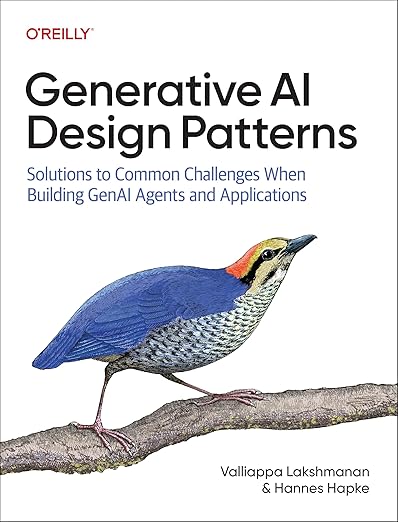
Generative AI Design Patterns
Valliappa Lakshmanan & Hannes Hapke • 2025
Covers 32 design patterns for generative AI including content control, RAG, reasoning, reliability, and agents. Uses a structured problem/solution format for each pattern.
Coverage by Dimension
Agent Concepts | Chapter 7 covers Tool Calling, Code Execution, and Multi-agent patterns. Broader focus on 32 GenAI patterns including RAG, reasoning, and reliability. |
Multi-Agent Patterns | Pattern #23 covers multi-agent collaboration. Additional supporting patterns include LLM-as-Judge (#17), Reflection (#18), and Long-Term Memory (#28) that enable multi-agent systems. |
Hands-on Implementation | Dedicated example folder for each of 32 patterns. Pattern-focused examples rather than complete applications. |
UX Principles | Focus is on backend patterns: content control, retrieval, reasoning, and reliability. Valuable foundation for agent backends. |
Topics Covered
What This Book Provides
- •Broad coverage of 32 GenAI patterns
- •Structured problem/solution format
- •Strong RAG and reliability coverage
- •Companion to ML Design Patterns book
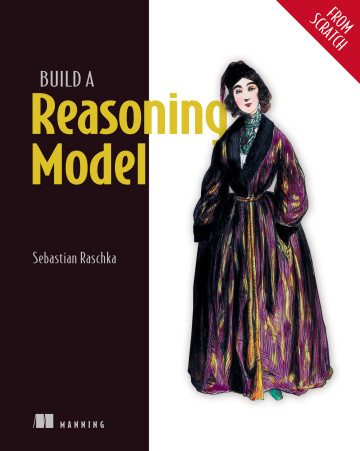
Build a Reasoning Model (From Scratch)
Sebastian Raschka • 2026
Starts from a pre-trained base model and adds reasoning to it in code: evaluation and answer grading first, then inference-time scaling (temperature and top-p sampling, self-consistency voting), then self-refinement, then training with reinforcement learning from verifiable rewards and GRPO, then distillation. Mirrors how models like DeepSeek R1 are actually built, at a size that runs locally. Eight chapters and seven appendixes; the appendixes cover the Qwen3 source, larger models, batched throughput and a chat interface.
Coverage by Dimension
Agent Concepts | Reasoning is covered in depth — inference-time scaling, self-consistency, self-refinement — and Ch3 builds the answer grading that verifiable rewards depend on. Tools, memory and orchestration are out of scope. |
Multi-Agent Patterns | Single model throughout. No coordination, handoff or orchestration content. |
Hands-on Implementation | A working GRPO training loop in reasoning_from_scratch/ch06.py (reward_rlvr, sequence_logprob, compute_grpo_loss, train_rlvr_grpo), with batched and FSDP variants, then Ch7 adds KL, clip ratio and format rewards as separate runnable scripts. CI runs the code on Linux, macOS and Windows. |
UX Principles | One appendix builds a chat interface. Otherwise the subject is model internals. |
Topics Covered
What This Book Provides
- •Adds reasoning to a pre-trained base model, step by step
- •Mirrors DeepSeek R1-style training at a runnable size
- •Reinforcement learning implemented rather than described
- •Printed in color; 440 pages
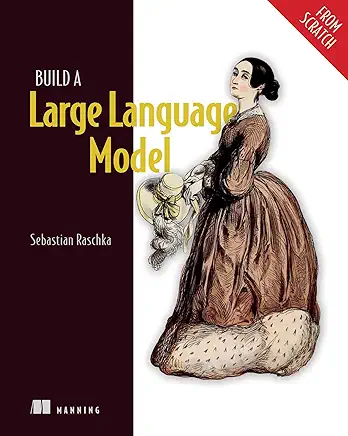
Build a Large Language Model (From Scratch)
Sebastian Raschka • 2024
Teaches how LLMs work by implementing them from scratch. Covers attention mechanisms, pretraining, and finetuning. Builds a GPT-like model step by step.
Coverage by Dimension
Agent Concepts | Focuses on understanding LLMs at the architecture level - essential foundation for understanding what agents call under the hood. |
Multi-Agent Patterns | Focuses on single model training and finetuning. Valuable for teams building custom models for agent systems. |
Hands-on Implementation | Extensive notebooks building GPT from scratch. Every concept implemented in code. |
UX Principles | Focus is on model internals: attention, pretraining, finetuning. Deep understanding helps debug agent behavior. |
Topics Covered
What This Book Provides
- •Deep understanding of LLM internals
- •From-scratch implementation approach
- •Includes video course companion
- •Bonus implementations: Llama 3.2, Qwen3, Gemma 3
How Dimensions Are Evaluated
Some links on this page are affiliate links.
The reader is encouraged to explore further based on specific learning goals.
Data last updated: November 2025 • Report an issue